
Small Kitchen Remodel Ideas for Older Columbus Homes

Small kitchens in older Columbus homes can be incredibly charming—and incredibly frustrating. With the right layout and storage ideas, you can keep the character you love while making the space work much harder for everyday cooking and gathering.
Start with a Smart Small-Kitchen Layout
In older homes, you often have fixed walls, tight doorways, and maybe a single small window. Instead of forcing a big‑kitchen mindset into a small footprint, lean into layouts that prioritize flow and function.
1. Optimize the Work Triangle (Within Limits)
You may not be able to completely reconfigure your kitchen, but you can:
Tighten the distance between sink, stove, and refrigerator so you’re not walking laps.
Swap appliance positions (when feasible) to create a more efficient prep‑cook‑clean path.
Move the fridge out of tight corners where doors block traffic.
Even small shifts in appliance placement can make an older kitchen feel less cramped.
2. Consider a “One-Wall Plus” Layout
If you have a narrow kitchen:
Keep most major appliances and cabinets along one wall.
Add a shallow run of storage on the opposite wall: narrow pantry cabinets, open shelves, or a slim counter for coffee or small appliances.
This keeps the center open while still giving you extra storage and work surface.
3. Use Peninsulas Instead of Full Islands
In many Columbus bungalows and older two‑stories, the kitchen footprint can’t comfortably support a full island. A peninsula can:
Create extra counter space and seating without closing off walkways.
Provide a natural trxaansition to a dining room or breakfast nook.
Offer base cabinet storage while still allowing good flow.
Peninsulas are especially helpful in kitchens that open to a dining room via a widened doorway.
Storage Ideas That Make a Small Kitchen Feel Bigger
Small kitchens live or die on storage. You can’t always add square footage, but you can create more usable space.
1. Go Vertical with Cabinets
Extend wall cabinets closer to the ceiling for extra storage.
Use the highest shelves for rarely used or seasonal items.
Consider a small crown detail that matches your older home’s character so taller cabinets feel intentional.
If full‑height cabinets feel too heavy on every wall, use them on one “storage wall” and keep others a bit lighter.
2. Turn Dead Corners into Storage Workhorses
Older kitchens often have awkward corners. Upgrade them with:
Lazy Susans or corner carousels.
Pull‑out blind corner units that bring items to you.
Angled or diagonal corner cabinets when layout allows.
This pulls more function out of the same footprint.
3. Use Drawers Instead of Deep Base Cabinets
In a small kitchen, deep drawers are your friend:
Store pots, pans, and lids in wide drawers instead of stacked in dark cabinets.
Use shallow top drawers for tools and utensils, deeper ones below for dishes or food containers.
Add drawer organizers so small spaces stay tidy.
Drawers make it easier to see and reach everything without crouching and digging.
4. Add a Tall Pantry Cabinet
If you have one available wall or end of a run:
Install a full‑height pantry cabinet with adjustable shelves or roll‑outs.
Use it to store dry goods, small appliances, and bulk items.
This single piece can often replace multiple half‑useful cabinets in a small kitchen.
5. Consider Open Shelves (In Moderation)
Open shelving can:
Lighten up a short wall or tight corner.
Create a spot for everyday dishes, glasses, or pretty pieces.
Keep it curated and functional—too many open shelves in a small kitchen can quickly look cluttered.
Make Older Kitchens Feel Brighter and More Open
Many older Columbus kitchens have small windows, low ceilings, or darker finishes that make the space feel even smaller. A few design moves can change that.
1. Lighten Cabinets and Walls
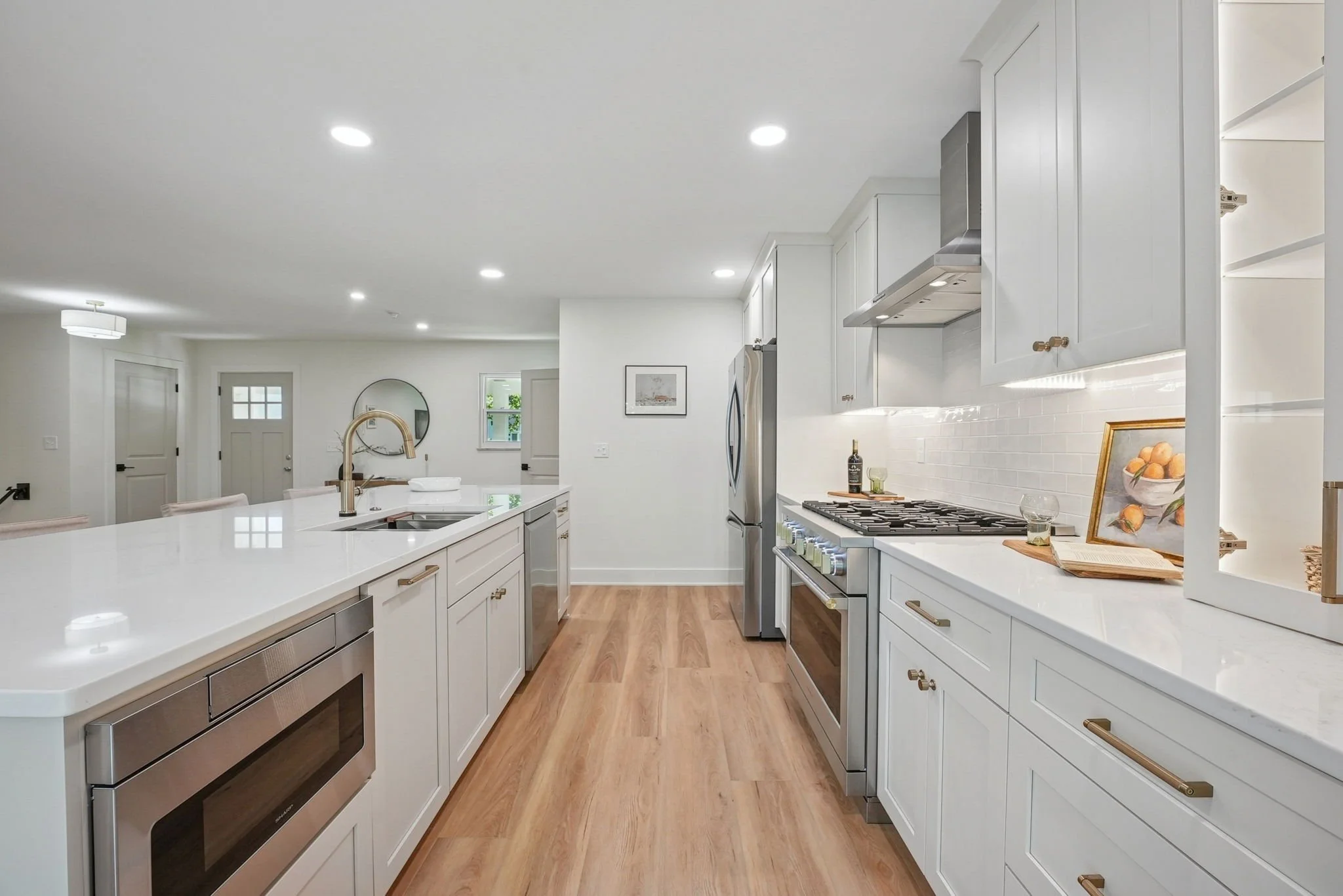
Light or mid‑tone cabinet colors reflect more light and make the room feel bigger.
Soft whites, warm grays, and gentle greiges play nicely with older trim and flooring.
Keep wall color calm and consistent—too much high‑contrast pattern on walls can shrink the room visually.
If you love darker tones, try them on the lower cabinets or a small accent, not everywhere.
2. Choose the Right Backsplash
Simple subway or vertically stacked tiles can visually stretch a wall.
Lighter grout with light tile keeps things airy; slightly darker grout can add interest without feeling busy.
Running tile all the way to the underside of cabinets or to the ceiling on a key wall makes the room feel more finished.
Avoid very busy, dark patterns across the entire backsplash in a tight kitchen.
3. Layer Lighting for a Bigger-Feeling Space
Older kitchens often rely on a single ceiling fixture. Improve this by adding:
Recessed lights or a few small flush mounts for overall brightness.
Under‑cabinet lighting so prep areas aren’t in shadow.
A small pendant or semi‑flush fixture over a sink or peninsula for a focal point.
Good lighting can make a small kitchen feel more spacious and more enjoyable to work in.
Appliances and Fixtures that Work in Small Kitchens
Thoughtful sizing and placement matter more than ever in compact spaces.
1. Right-Sized Appliances
Consider 30" or even 24" ranges and refrigerators when layout is tight.
Counter‑depth fridges save inches in a narrow room and improve circulation.
Panel‑ready appliances can help visually blend large pieces into cabinetry.
The goal is a kitchen that functions well, not one overloaded with oversized appliances.
2. Sink Choices
A single‑bowl sink often works better than a double in small kitchens, giving more usable bowl space.
Undermount sinks maximize counter usability and make cleaning easier.
A slightly smaller sink can free up more precious counter area.
Pair with a pull‑down faucet that doesn’t overpower the space visually.
Respecting the Character of Older Columbus Homes
Older homes have quirks and charm—part of the reason you chose yours. A great small kitchen remodel honors that while improving function.
1. Balance Old and New
Keep or reinterpret original details: trim profiles, door styles, or a built‑in if it can be refreshed.
Choose cabinet door styles that feel compatible with the era (e.g., shaker or simple recessed panel for many Columbus homes).
Use modern storage and lighting while keeping finishes warm and welcoming.
2. Coordinate with Adjacent Rooms
In many older homes, the kitchen opens to a formal dining room or a small breakfast nook:
Make sure flooring transitions feel natural.
Tie in colors or materials (like a similar wood tone or consistent paint undertone).
Consider partial wall openings or widened doorways (when structurally feasible) to visually expand the kitchen.
This lets your small kitchen borrow light and airiness from neighboring spaces.
Planning a Small Kitchen Remodel: Where to Start
When you’re ready to move beyond Pinterest ideas and into planning:
List your pain points.
Not enough storage? No prep space? Poor lighting?
Decide what you can live with.
Are you open to layout changes, or do you prefer working with existing walls?
Define a rough budget range.
This will guide whether you’re doing a facelift, a cabinet + layout upgrade, or a more extensive remodel.
Gather a few inspiration images that reflect your home’s character and your style (rather than trends alone).
A designer or design‑build remodeler can then translate those into realistic layout and storage concepts tailored to your older Columbus home.
Request a Small Kitchen Design Consult
If you have a compact kitchen in an older Columbus home — whether you're in Upper Arlington,Bexley, Clintonville, Grandview or anywhere else in the Columbus area — you don't need more square footage to get a better kitchen. You need smarter layout, storage, and material choices.
Click here to request a small kitchen design consult. In that conversation, you can:
Share photos and measurements of your current kitchen.
Talk through your biggest frustrations and wish‑list items.
Get ideas for layouts, storage solutions, and finishes that fit both your home’s character and your budget.