
Choosing Materials for Your Columbus Kitchen Remodel
Choosing the right materials for your Columbus kitchen remodel is one of the biggest factors in how your space will look, feel, and perform every day. This guide walks through the main categories—cabinets, countertops, tile, flooring, and fixtures—so you can make confident, coordinated choices.
How to Think About Kitchen Materials (Big Picture)
Before you get into specific products, get clear on three things:
Durability: How hard will your kitchen be used (kids, pets, frequent cooking)?
Maintenance: How much time do you realistically want to spend cleaning and babying surfaces?
Style direction: Warm and classic, clean and modern, or something in between?
Answering those upfront will help narrow the overwhelming number of options.
Cabinets: Foundation of Your Kitchen Look
Cabinets are often the largest visual element and a major budget line item.
1. Cabinet Construction Levels
Refacing / repainting existing cabinets
Good if boxes are solid and layout works.
Lowest cost way to change the look (color and door style).
Stock / value line cabinets
Pre‑set sizes, fewer finish options.
Works for tighter budgets and straightforward layouts.
Semi‑custom cabinets
Wider range of sizes and finishes, better fit to your space.
Great balance of flexibility and cost for most Columbus kitchens.
Full custom cabinets
Built to exact dimensions, maximum storage customization.
Best when you have tricky spaces or a strong design vision.
2. Cabinet Door Style & Color
Shaker: versatile, works with both modern and traditional homes.
Slab/flat front: clean, modern lines, pairs well with minimal hardware.
Raised panel: more traditional or classic look.
Color ideas that work well locally:
Soft whites and off‑whites for bright, timeless kitchens.
Warm grays, taupes, or greige for a softer, modern feel.
Deeper tones (navy, forest, charcoal) on islands or lower cabinets for contrast.
Countertops: Daily Workhorse
Countertops see constant action—cutting (with boards), spills, hot pans, and small appliances.
Popular Materials
Quartz (engineered stone)
Pros: Durable, non‑porous, low maintenance, consistent patterns.
Great for busy kitchens where you don’t want to worry about staining.
Granite / natural stone
Pros: Unique movement, heat‑resistant.
Usually needs periodic sealing; choose honed or textured finishes if you’re concerned about etching.
Butcher block
Warm, natural look, great for islands.
Needs regular oiling and more careful maintenance; best as an accent.
Laminate (high‑quality)
Budget‑friendly with many improved looks.
Good for refresh projects or secondary spaces.
Practical Tips
Avoid extremely busy patterns if you’re also choosing bold backsplash tile.
Consider rounded or eased edges in homes with kids to soften sharp corners.
If you entertain often, think about how drink glasses and serving trays will feel on the surface (texture, slipperiness).
Backsplash Tile: The Personality Layer
Your backsplash can either quietly support the rest of the design or act as a statement feature.
Popular Backsplash Choices
Classic subway tile (in various sizes)
Timeless and flexible, works with many cabinet and counter combinations.
You can modernize it with different grout colors or stacked patterns.
Larger‑format or elongated tiles
Fewer grout lines, slightly more contemporary.
Patterned or decorative tile
Best used as an accent (behind the range) if you want longevity.
Choose more neutral counters and cabinets to let this shine.
Practical Tips
Consider cleaning: glossy tiles are easier to wipe behind the range than highly textured ones.
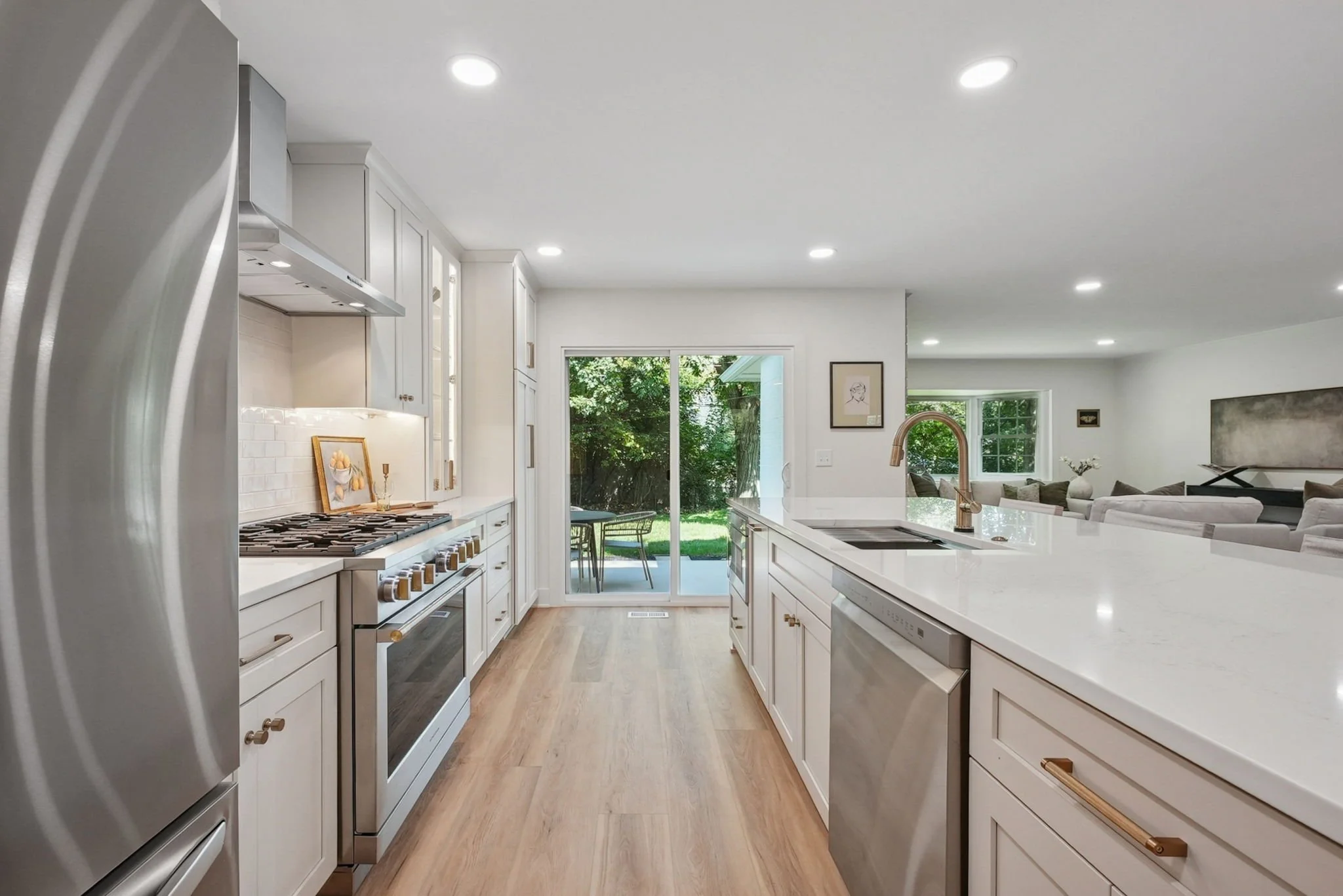
Run the tile at least to the bottom of the upper cabinets; full‑height backsplashes can elevate the whole room when budget allows.
If you have busy countertops, keep backsplash simpler to avoid visual noise.
Flooring: Comfort, Durability, and Cohesion
Kitchen flooring must handle spills, foot traffic, and connections to nearby rooms.
Common Options
Luxury vinyl plank (LVP) or tile
Water‑resistant, softer underfoot than tile, budget‑friendly.
Great for busy families and open‑plan homes where you want continuity.
Engineered hardwood
Warmer look, coordinates nicely with older Columbus homes.
Needs reasonable care around water, but modern finishes are much more forgiving.
Tile
Very durable and water‑resistant.
Harder and colder underfoot; consider area rugs or mats where you stand most.
Cohesion Tips
Think about adjacent spaces: if you have open sightlines to living and dining areas, choose flooring that works for the entire main level.
Keep heavy wood grain or pattern in either the floor or the cabinets, not both, to avoid a busy look.
Fixtures & Hardware: Small Pieces, Big Impact
These details tie everything together and are relatively easy to change later.
Plumbing Fixtures
Faucets: Single‑handle pull‑down in a mid‑height arch is a practical workhorse.
Finishes:
Brushed nickel and stainless: safe, versatile choices.
Brushed brass / champagne bronze: warm accent that pairs well with white or darker cabinets.
Matte black: modern contrast; be mindful of hard water spotting.
Lighting
Plan for layers:
Ambient: Recessed lighting for overall brightness.
Task: Pendants over islands, under‑cabinet lights for counters.
Accent: Over the sink or inside glass cabinets if you have them.
Match or coordinate finishes with your faucet and hardware, but don’t be afraid to mix thoughtfully (e.g., black hardware with brass lighting).
Hardware
Choose bar pulls or simple knobs that are comfortable to grip.
Keep the style consistent with your cabinet door style (sleek for modern, slightly more detailed for traditional).
In a Columbus home with existing character, lean toward classic forms so the kitchen feels like it belongs.
Coordinating Your Kitchen Materials (Without Getting Overwhelmed)
To avoid decision fatigue:
Start with cabinets and flooring
They are the biggest surfaces and hardest to change later.
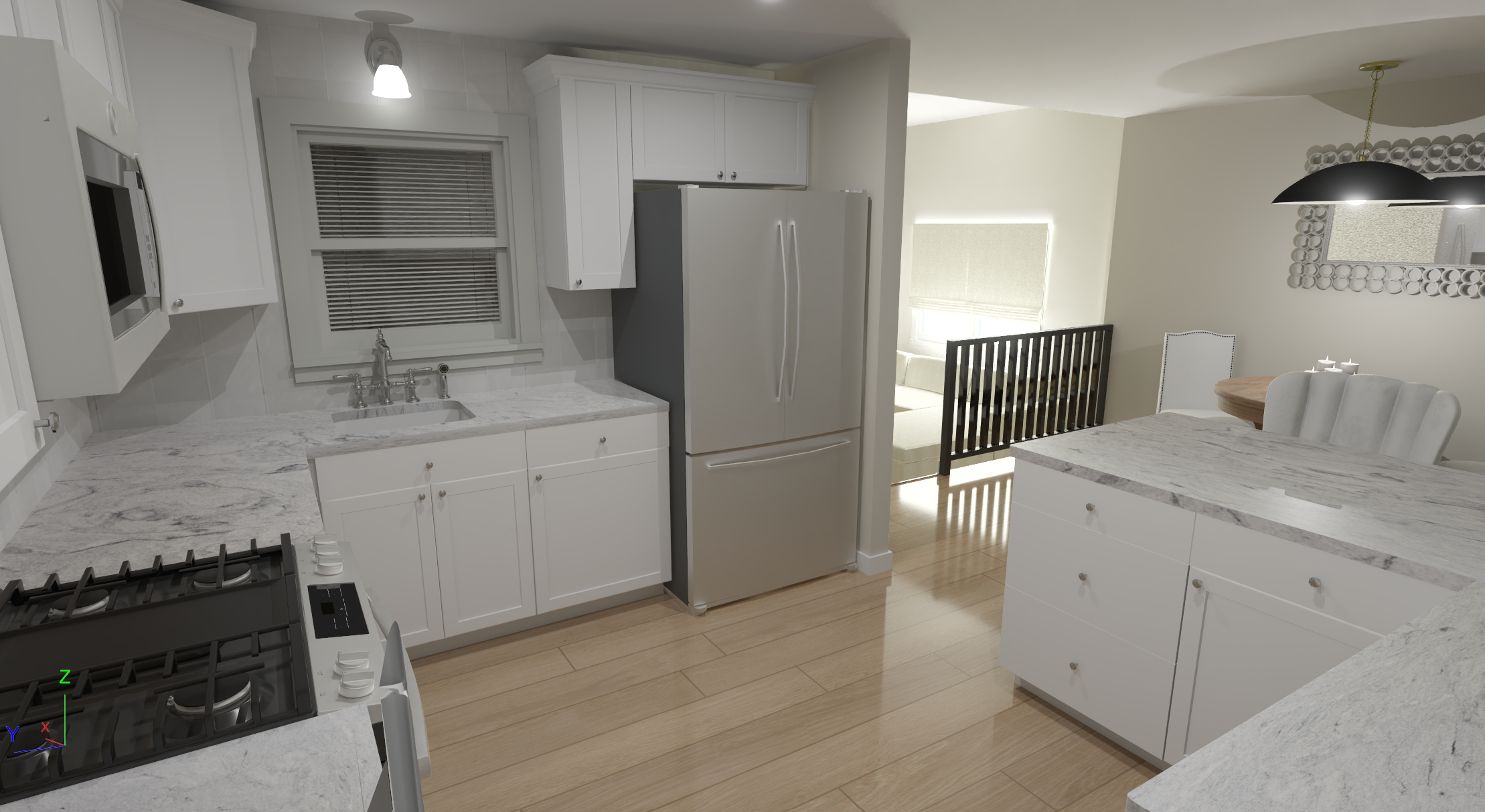
Decide whether you want more contrast (dark floor/light cabinets) or a softer, tone‑on‑tone look.
Choose countertops next
Make sure pattern and color work with both cabinets and floors.
If your counters have a lot of movement, lean simpler on backsplash.
Pick backsplash and hardware as “supporting actors”
Backsplash can add texture or subtle pattern.
Hardware and fixtures add the finishing layer of warmth or contrast.
Look at everything together
Use samples in the same light you’ll have at home (daytime and evening).
Check how colors shift under warm vs. cool lighting.
Common Material Mistakes to Avoid
Choosing everything in isolation: Always look at samples together, not one at a time.
Ignoring maintenance needs: If you hate sealing stone or scrubbing grout, choose more forgiving materials.
Over‑designing: Too many statement choices (busy counters, bold backsplash, high‑contrast floors) can date faster and feel chaotic.
Forgetting your home’s character: A very modern kitchen in a classic Columbus home can work—but only if transitions and materials are chosen thoughtfully.