
Once the cabinets and appliances are chosen for a kitchen remodel, countertops are usually the next big decision. For most Columbus homeowners it comes down to four materials: quartz, granite, quartzite, and marble. They can look similar in a showroom and behave very differently in a working kitchen.
This guide explains what each one is, how they compare on durability and upkeep, and the other countertop decisions worth making early.
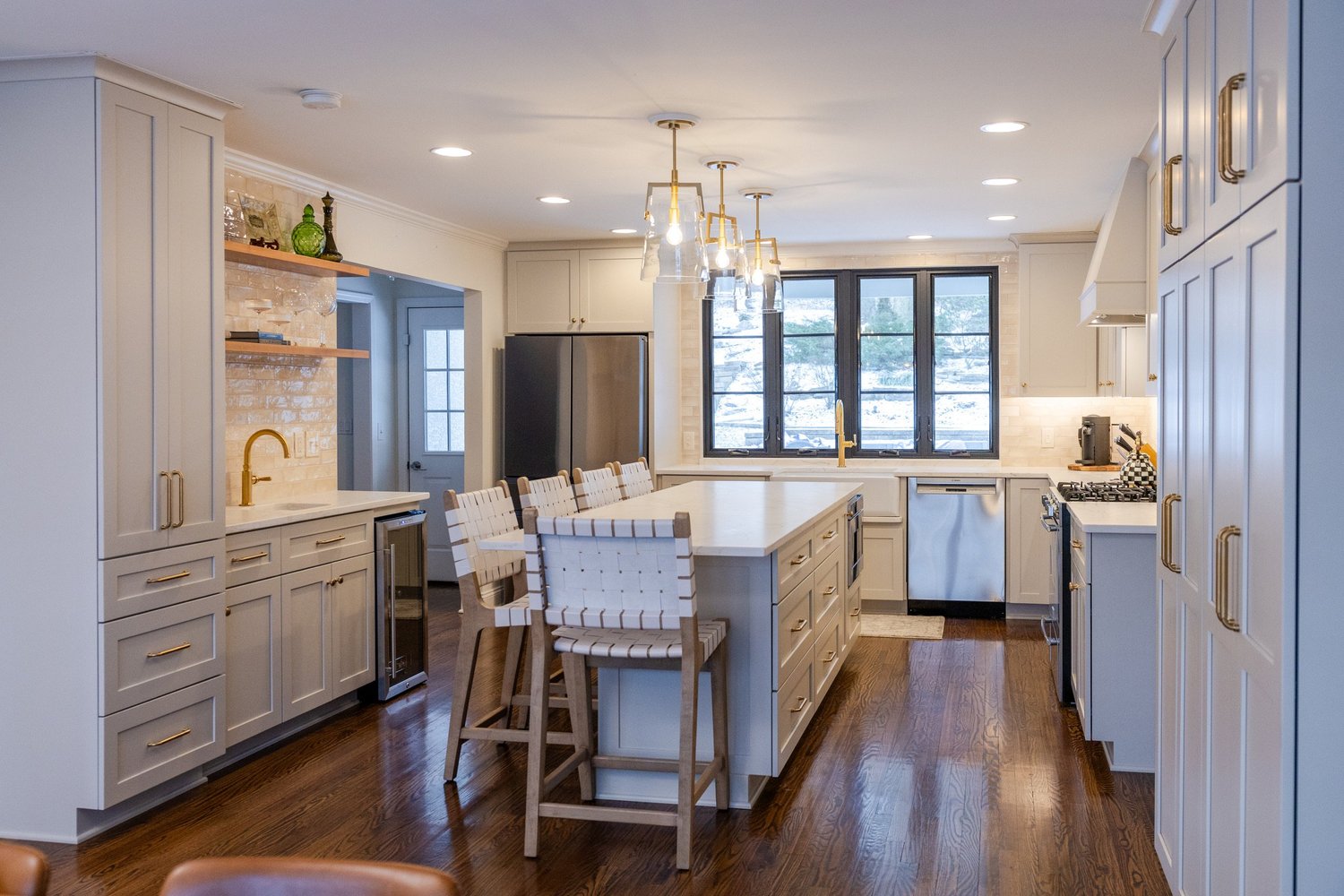
Quartz, Granite, Quartzite, and Marble: What Is the Difference?
The names are close, which causes a lot of confusion. Quartz is manufactured. Granite, quartzite, and marble are natural stones cut from a quarry.
Quartz
- Made from ground natural quartz bound with resin and pigment
- Non-porous, so it never needs sealing
- Color and pattern are consistent from slab to slab
- Wide range of looks, from solid white to marble-style veining
- The resin can scorch, so hot pans need a trivet
Granite
- Quarried stone with a speckled or flowing pattern
- Every slab is one of a kind
- Handles heat well
- Hard and scratch resistant
- Needs to be sealed periodically to resist stains
Quartzite
- Quarried stone that began as sandstone and hardened under heat and pressure
- Often has soft, marble-like veining
- One of the hardest countertop stones available
- Handles heat well
- Needs sealing, and is harder to cut and fabricate
Marble
- Quarried stone formed from limestone, known for its classic veining
- Softer than granite and quartzite, so it scratches more easily
- Acids like lemon juice, vinegar, and wine leave dull marks called etching
- Handles heat well and stays cool to the touch
- Needs sealing, and develops a patina with use
How They Compare
| Quartz | Granite | Quartzite | Marble | |
|---|---|---|---|---|
| What it is | Engineered stone | Natural stone | Natural stone | Natural stone |
| Look | Consistent and predictable | Speckled or flowing, unique per slab | Veined and marble-like, unique per slab | Classic soft veining, unique per slab |
| Sealing | Never | Periodically | Periodically | Periodically |
| Heat | Use a trivet | Very good | Very good | Good |
| Stain resistance | Excellent | Good when sealed | Good when sealed | Fair. Sealing helps with stains but not etching |
| Scratch resistance | Very good | Very good | Excellent | Fair |
| Direct sunlight | Can discolor over time | Holds up well | Holds up well | Holds up well |
| Relative cost | Mid to upper range | Widest range, from entry level to exotic | Generally the upper range | Mid to upper range, depending on the variety |
Which One Fits Your Kitchen?
Choose Quartz If You Want Low Maintenance
Quartz is the easiest of the three to live with. There is nothing to seal, spills wipe up, and the slab you see in the sample is very close to the slab you get. It is a strong fit for busy households and for anyone who wants a clean, consistent look. The tradeoff is heat: set a hot pan down on a trivet, not on the counter.
Choose Granite If You Want Natural Stone That Works Hard
Granite has been a kitchen standard for decades for good reason. It takes heat, resists scratches, and offers the widest range of colors and price points of any natural stone. If you remember the busy, speckled granite of the early 2000s, it is worth another look. Many current selections are quieter, and honed or leathered finishes give granite a softer, more modern feel.
Choose Quartzite If You Want the Marble Look With More Durability
Quartzite gives you the depth and movement of natural stone, often with the soft veining people love in marble, in a much harder material. It suits homeowners who want the countertop to be a feature of the kitchen. It does need sealing, and because it is harder to fabricate it generally sits at the upper end of the budget.
Choose Marble If You Love the Look and Accept the Patina
Nothing else looks quite like marble, which is why so many other countertops are designed to imitate it. It is also the most delicate of the four. Marble will etch where acidic foods and drinks sit on it, and it scratches and stains more easily than granite or quartzite. Sealing helps with stains but does not prevent etching.
Homeowners who are happiest with marble are the ones who expect it to change. A honed finish makes etching far less noticeable than a polished one, and over the years the surface takes on a soft, lived-in character. If you want the look without the upkeep, consider marble on a baking station, a pantry counter, or a bathroom vanity, with a tougher stone on the main work surfaces.
What About Other Materials?
Butcher block, soapstone, and porcelain slabs are also options. They are often used on an island, a coffee bar, or a pantry to contrast with the main countertop.
Other Countertop Decisions to Make Early
The material is only part of the choice. These details affect the look, the cabinet design, and how the slabs are laid out.
Finish
- Polished is glossy and shows the most color
- Honed is matte and soft
- Leathered has a light texture that hides fingerprints and water spots
Edge profile
- An eased or square edge is clean and current
- Beveled, ogee, and other shaped edges suit traditional kitchens
- A mitered edge makes the top look thicker
Island and seams
- Slab size determines whether a large island can be one piece
- Bold veining makes seam placement more important
- A waterfall end carries the stone down the side of the island
Backsplash and sink
- A full-height slab backsplash uses the same stone up the wall
- Undermount sinks need a finished cutout in the slab
- Both affect how much material your kitchen needs
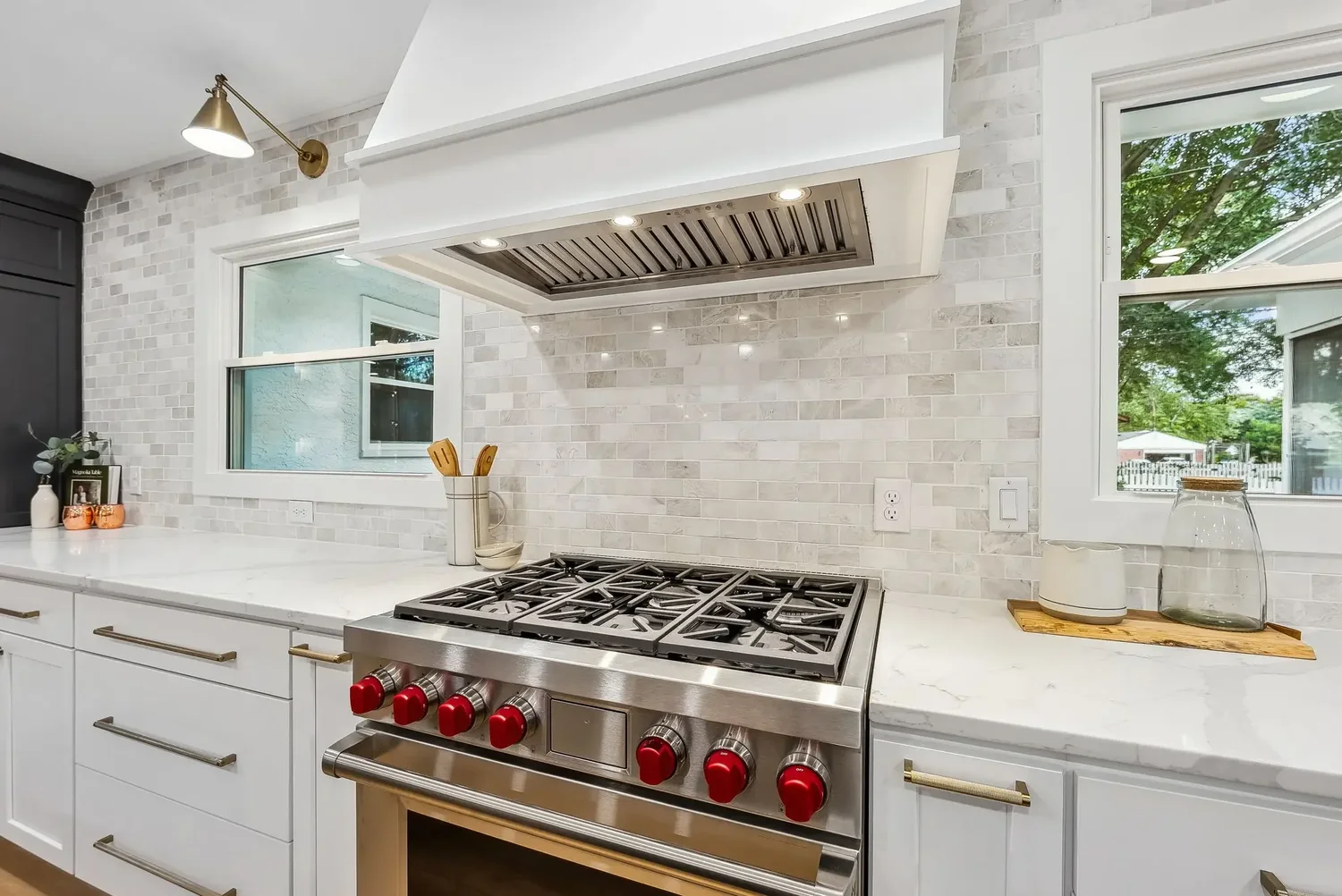
How Countertops Fit Into the Remodel
We recommend choosing your countertop material during design, alongside your cabinets, so the colors and finishes are selected together. For natural stone, plan to see the actual slab in person. Granite, quartzite, and marble vary so much that a small sample cannot show you what the full slab looks like.
The countertops themselves are measured later. Once the cabinets are installed, the fabricator creates a template of the exact layout, then cuts and installs the stone to fit. That is why the countertop is one of the last major pieces to go in.
Common Questions
Which countertop is the most durable?
Quartz, granite, and quartzite all hold up well in a kitchen, and marble is the most delicate of the four. Quartzite is the hardest and most scratch resistant. Granite is close behind and handles heat equally well. Quartz is the most stain resistant because it is non-porous, but it is the most sensitive to heat.
How often do natural stone countertops need to be sealed?
It depends on the stone and the sealer. A simple test is to leave a few drops of water on the surface. If the water darkens the stone within a few minutes instead of beading up, it is time to reseal. Sealing is a quick wipe-on, wipe-off job.
Is quartz or granite better for resale?
Buyers respond well to either. What matters more is that the countertop is in good condition and suits the style of the kitchen. Choose the one that fits how you cook and how much upkeep you want.
Not Sure Which Countertop Fits Your Kitchen?
We will help you compare materials alongside your cabinetry and finishes, and show you the combination in 3D renderings of your actual kitchen before anything is ordered.