
2D vs 3D Renderings for Your Remodel: Why They Matter
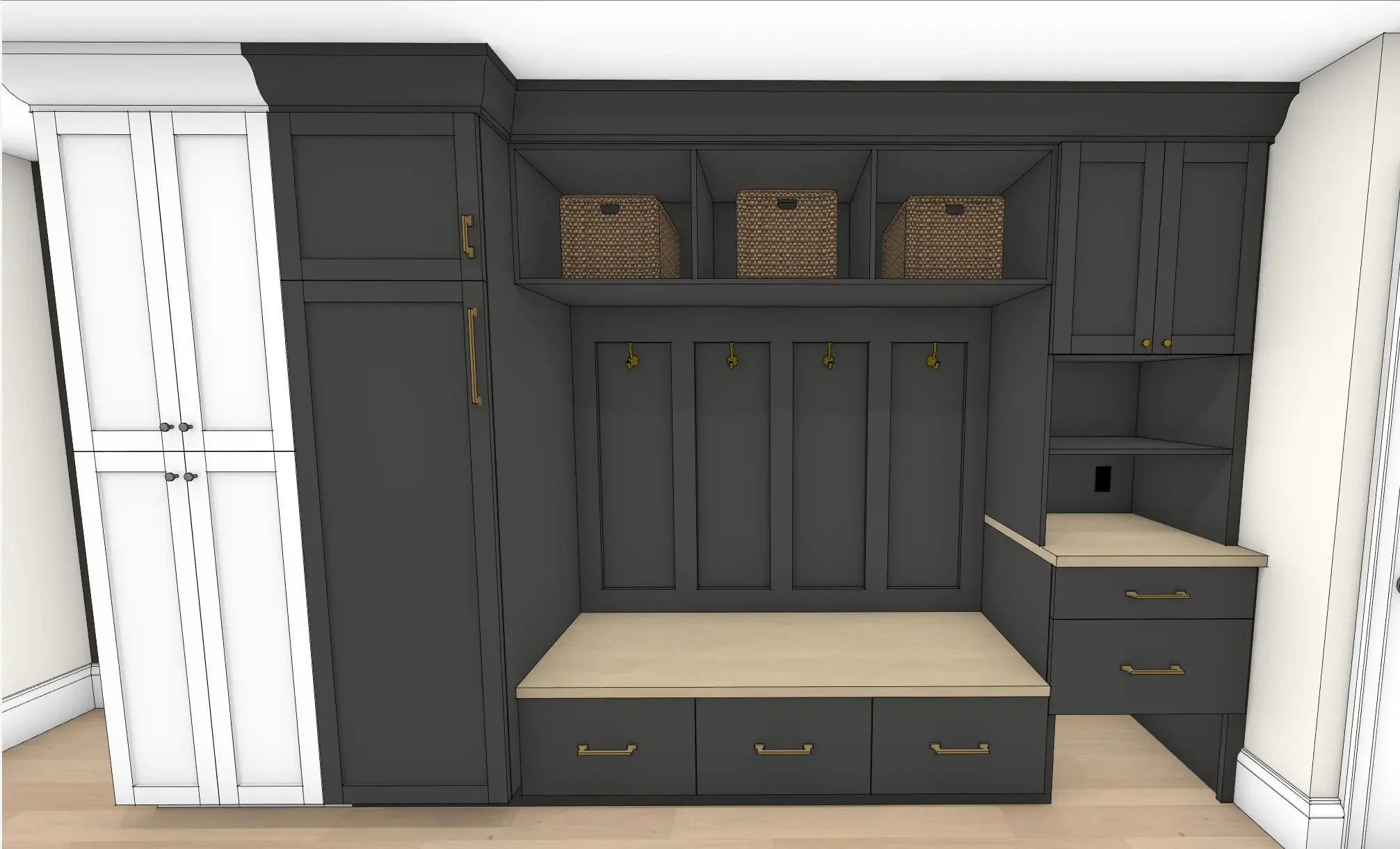
If you’ve ever tried to picture a new kitchen or bathroom from a simple sketch or product board, you know how hard it can be to “see” the finished space. That’s where 2D and 3D renderings come in. For Columbus homeowners, they’re one of the most powerful tools for making better design decisions before anyone swings a hammer.
Renderings turn measurements and ideas into visuals you can react to and refine, so you end up with a remodel that looks and feels like what you had in mind—not a surprise you’re stuck with.
What Are 2D and 3D Renderings?
Before we get into the pros and cons, it helps to define terms.
2D Renderings (Plans & Elevations)
2D drawings show your remodel from a flat, bird’s‑eye or straight‑on view. Common types include:
Floor plans: a top‑down view showing walls, doors, windows, and how cabinets and fixtures are laid out.
Elevations: straight‑on views of a wall—great for seeing cabinet layouts, tile patterns, and fixture placement.
2D drawings are excellent for understanding dimensions, clearances, and basic layout.
3D Renderings (Perspective Views)
3D renderings show your remodel in perspective—more like a photograph of a space that doesn’t exist yet. These can be:
Simple 3D views with basic colors and shapes.
Detailed, photo‑realistic images showing materials, lighting, and décor.
3D views are especially helpful for understanding how a space will feel, not just how it measures.
Why 2D Renderings Still Matter
2D drawings may not be as flashy as 3D, but they’re essential.
Clarity on Layout and Measurements
2D plans help you:
See how much walking space you’ll have between an island and cabinets.
Confirm door swings won’t collide with appliances or furniture.
Understand how big each cabinet, shower, or closet really is.
They make sure the design works on paper before you commit to materials and labor.
Communication with Trades
Builders, electricians, plumbers, and cabinet makers rely on 2D drawings for:
Exact locations of walls, outlets, switches, and plumbing.
Cabinet dimensions and appliance placements.
Tile layouts and fixture heights.
Good 2D drawings reduce on‑site questions and guesswork, which helps keep your project on schedule.
What 3D Renderings Add to the Process
Where 2D drawings excel at precision, 3D renderings excel at visualization.
See the Space from a Realistic Viewpoint
3D renderings can show you:
How your kitchen looks as you stand at the island or enter from the hallway.
What you’ll see when you walk into a new bathroom.
How tall cabinets, floating shelves, or built‑ins feel in relation to ceilings and windows.
This makes it much easier to catch things that “technically work” but don’t feel quite right.
Understand Color, Light, and Material Relationships
3D views can help you:
See how cabinet colors, countertops, and backsplash tile work together.
Get a sense of how light and dark finishes affect the mood of the room.
Understand whether a bold tile or paint color feels exciting or overwhelming.
It’s much cheaper to adjust color or material in a 3D rendering than after everything is installed.
Build Confidence and Reduce Regret
Many homeowners struggle to make decisions because they’re worried about making a mistake. 3D renderings:
Let you “try on” different looks without committing.
Help partners or family members get on the same page.
Reduce second‑guessing because you’ve seen a realistic preview.
That confidence matters a lot once the project moves into construction.
2D vs 3D: When Do You Need Each?
Both have a role, and you don’t always need the same level of detail for every project.
Projects Where 2D May Be Enough
Very small updates (like a simple powder room refresh).
Projects where layout and finishes aren’t changing much.
When you’re extremely comfortable reading plans and imagining the result.
Even then, basic 3D visuals can still be helpful, but they may not be essential.
Projects Where 3D Is Especially Valuable
Kitchens: where cabinet heights, island size, and sightlines matter a lot.
Bathrooms: especially when reconfiguring layouts or creating spa‑like spaces.
Basements: multi‑zone layouts (bar, TV area, office, gym, guest space) benefit from 3D.
Open‑concept remodels: where you need to see how spaces flow together.
If you’re making significant changes—or investing at a level where mistakes would be painful—3D views are usually well worth it.
How 3D Renderings Help Avoid Costly Changes
Changing your mind on paper is cheap. Changing your mind mid‑construction can be expensive. 3D renderings help prevent:

Re‑doing tile or cabinetry because the finished look isn’t what you imagined.
Moving walls or openings after framing because sightlines feel off.
Swapping out finishes late in the process because colors or textures clash.
By exploring options up front, you can:
Lock in decisions with much greater confidence.
Reduce the chances of “we should’ve done this differently” once everything is installed.
Keep your budget and timeline more predictable.
What to Expect in a 3D Rendering Process
Every remodeler works a bit differently, but a typical 3D rendering process might look like this:
Measure & Document the Existing Space
Capture accurate dimensions and current conditions.
Develop Initial Layouts in 2D
Floor plans and elevations to solve space planning first.
Create 3D Views Based on the Chosen Layout
Show key perspectives: entering the room, standing at the sink, sitting at the island, etc.
Layer In Materials and Colors
Apply cabinet colors, counters, tile, flooring, and fixtures.
Review and Refine Together
React to what you see: “This island feels too big,” or “Let’s try a lighter cabinet color.”
Update renderings until the design feels right.
Use the Final Renderings as a Guide During Construction
They become a visual reference for both you and the build team.
Common Myths About 3D Renderings
“They’re Just for Fancy, High-End Projects.”
While ultra‑detailed, photo‑realistic renderings are often used in higher‑end remodels, simpler 3D views are useful on almost any project where layout and finishes change significantly.
“They’ll Lock Me In Too Rigidly.”
In reality, renderings are a tool for exploration, not a cage. They make it easier to test different ideas before locking anything in.
“They’re Only for People Who Can’t Read Plans.”
Even if you’re comfortable with 2D drawings, 3D renderings help you catch emotional and experiential aspects (how a space feels) that are hard to convey in flat views.
Choosing a Remodeler Who Uses 2D & 3D Well
If you’re looking for 3D renderings for your home remodel in Columbus, ask potential partners:
Do you provide both 2D plans and 3D views as part of your design process?
At what stage do I see 3D renderings—concept, final design, or both?
How detailed are your 3D visuals (basic massing vs. more realistic materials and lighting)?
How do we use the renderings to make decisions and avoid changes during construction?
Their answers will show you how seriously they take design, not just construction.
How a 3D Rendering Consult Helps
A 3D rendering consult is a chance to:
Talk through the scope of your project (kitchen, bath, basement, whole‑home).
Understand what level of 2D/3D visualization makes sense for your budget and goals.
See examples of past renderings and how they translated to finished spaces.
Learn how early design work can save time and money during the build.
It’s about figuring out how much visualization you need to feel confident—not selling you unnecessary bells and whistles.
Request Your 3D Rendering Consult
If you’re planning a remodel and want to see your new space before construction starts, 2D and 3D renderings can make the entire process clearer, smoother, and less stressful.
Click here to request a 3D rendering consult. In that conversation, you can:
Share your ideas for your kitchen, bathroom, basement, or whole‑home project.
Learn how 2D plans and 3D renderings would be used in your design.
Get a sense of timeline, costs, and decision points tied to the design process.