
How Much Does a Kitchen Remodel Cost in Columbus — and How Long Does It Take?
A clear, honest breakdown of 2026 price tiers, where the money goes, realistic timelines, and resale return — from the design-build team that builds these kitchens every week.
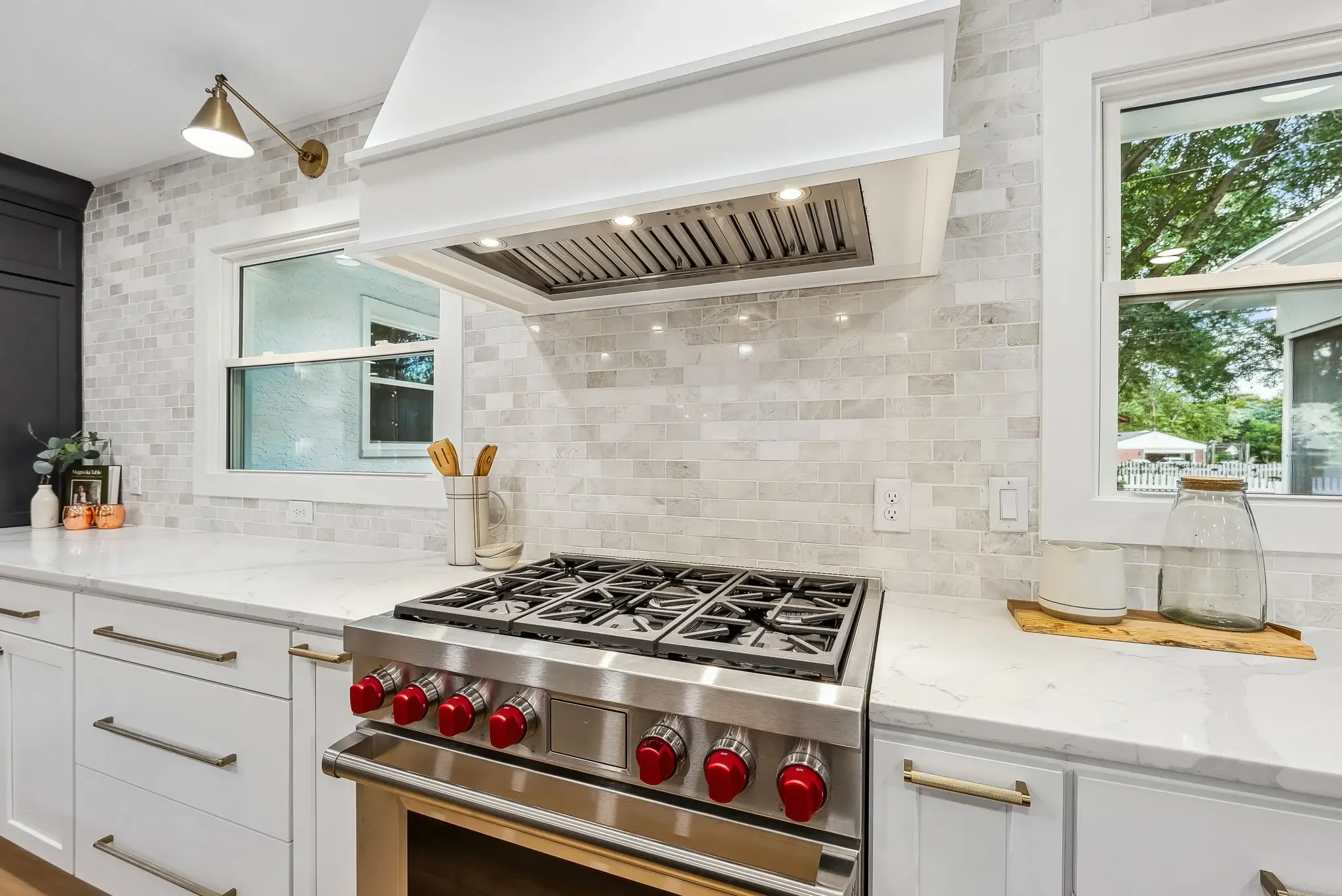
A recent Upper Arlington kitchen — fully custom Amish cabinetry, natural-stone backsplash, 36” Wolf dual fuel range and a vented statement hood.
A kitchen remodel in the Columbus area generally runs $20,000 to $350,000 in 2026, and takes 3 to 22 weeks of construction — depending almost entirely on one thing: how much you're changing.
That's a huge range, and we're not going to pretend otherwise. A countertop-and-backsplash refresh and a full down-to-the-studs reconfiguration with custom cabinetry are different projects with different price tags. The good news: once you know which kind of project you're actually after, the number gets a lot more predictable.
Columbus generally runs about 10–15% below the national median for kitchen work, thanks to Midwest labor and material costs. But the premium suburbs we work in — Upper Arlington, Grandview, Dublin, and Worthington — tend to land in the mid-to-high tiers, both because of the scale of the homes and because the investment aligns with long-term values in those zip codes. Below, we've broken kitchens into four clear tiers using real ranges from projects we actually complete.
THE FOUR TIERS
Kitchen remodel cost by project type
Use these to find roughly where you fit. Construction times are on-site build only — they don't include design, planning, or material lead times, which we cover further down.
| Project Type | Typical Investment (2026) | Est. Construction* |
|---|---|---|
| Kitchen RefreshSame layout | $20,000 – $50,000 | 3–5 weeks |
| New Kitchen, Same LayoutSame footprint | $50,000 – $110,000 | 6–10 weeks |
| New Kitchen, New LayoutStructural changes | $100,000 – $250,000 | 10–16 weeks |
| Designer / LuxuryHighest level | $200,000 – $350,000 | 14–22 weeks |
Kitchen Refresh — $20K to $50K
3–5 weeks · same layout
The fastest, most budget-friendly way to make a kitchen feel new without touching the layout. Typically includes new countertops, sink, faucet, and disposal; a new backsplash; new cabinet hardware plus either freshly painted existing cabinets or new semi-custom cabinets; paint on walls, ceiling and trim; and new decorative and task lighting. Best when the layout already works and the cabinet boxes are in good shape.
New Kitchen, Same Layout — $50K to $110K
6–10 weeks · same footprint
A full reset in the same footprint — everything comes out and goes back in new, but we're not moving walls, plumbing, or the major appliances. Typically includes fully custom, Amish-made cabinets and hardware; stone countertops (usually granite or quartz) and a tile backsplash; new sink, faucet and disposal; appliance installation; paint; and new lighting. Best for an aging or builder-grade kitchen ready for true custom cabinetry where the existing layout still serves you.
New Kitchen, New Layout — $100K to $250K
10–16 weeks · structural changes
Where a kitchen gets reimagined, not just refinished. Changes can include adjusting the layout (and often the surrounding rooms), adding or removing walls, relocating the sink, range, or appliances, changing window and door openings, adding square footage, or relocating the kitchen entirely. On top of the structural work it includes fully custom Amish cabinets, stone counters and backsplash, new sink/faucet/disposal/appliances, finish carpentry, layered lighting, paint, and new flooring. Best for a “forever home” where the current kitchen fights you every day.
New Kitchen, Designer / Luxury — $200K to $350K
14–22 weeks · highest level
Everything in a new-layout kitchen, executed at the highest level: fully custom Amish cabinets; natural stone counters (marble, Taj Mahal, quartzite); natural-stone or detailed-pattern backsplashes; a statement sink and real brass faucet; premium appliances (a 48"–60" range, oversized refrigeration, beverage fridges, double ovens, ice makers, a custom vented hood); layered lighting; new flooring; and features like a butler's pantry, wet bar, scullery, or messy kitchen.
Designer kitchens sit at the top of the 14–22 week range. A scullery, extensive trim and painting, cabinets that install on top of the countertops, and full-height stone backsplashes — which require two separate install visits — each add steps that extend the calendar.
THE BREAKDOWN
Where your money actually goes
Knowing the total is one thing; knowing where it goes is how you make smart trade-offs. Here's roughly how a mid-to-upper Columbus kitchen breaks down.
Cabinetry is the single biggest line item — higher for us than the 25–40% in generic guides, because our cabinets are fully custom and Amish-made rather than stock or semi-custom.
Countertop cost by material
Typical installed ranges in Central Ohio for 2026 — the choice homeowners ask about most.
| Material | Installed / sq ft | Notes |
|---|---|---|
| Granite | $50–$100 | Classic, durable, huge variety |
| Quartz | $60–$120 | Most popular here — low maintenance, consistent |
| Quartzite | $90–$200 | Natural stone, marble look, harder than marble |
| Marble | $100–$250 | True luxury; requires sealing and care |
LEVERS
What pushes your number up — and what brings it down
Two kitchens in the same neighborhood can price tens of thousands apart. We account for the “up” factors during your consultation, so they're built into your quote rather than sprung on you later.
What pushes it up:
Concealed conditions. Plaster walls, dated wiring, old plumbing and undersized panels are common in older UA, Grandview and Worthington homes — we scope for these so they're in your number from the start.
Scope of layout change. Moving a sink, opening a wall, or relocating the kitchen adds plumbing, electrical, and sometimes structural work.
Finish level. Quartz to natural stone, or a standard range to a 60" statement range, is where the top of each range comes from.
What brings it down — without cutting quality:
Keep your existing layout. If the sink, range, and refrigerator stay put, you skip the most expensive parts — plumbing moves, electrical reroutes, and structural work.
Mix "save" and "splurge." Design-build lets us put budget where it shows — one statement appliance or a stone island — and economize where it won't be missed.
Choose quartz over natural stone for the look of marble with none of the maintenance — and bundle projects to cut mobilization and permitting overhead.
None of the "up" factors are reasons to fear a remodel. They're reasons to plan one properly — which is what we do for a living.
THE SCHEDULE
How long does a kitchen remodel take?
The construction times above — 3 to 22 weeks — are the on-site build. The full project, from first meeting to the day you cook in it, is longer. That's true of every quality remodeler. Here's the honest version, in three phases.
Phase 1: Design & Planning — 2 to 4 weeks
Selections get made and the kitchen gets drawn. For fully custom cabinetry, we produce shop drawings — 2 to 4 weeks, including an on-site measure and one round of edits. Nothing gets built until those drawings are approved; that approval locks your design and greenlights the build.
Phase 2: Material Lead Times (the part people underestimate)
Once your design is approved, materials get ordered — and the good stuff takes time to make:
| Material | Lead Time |
|---|---|
| Fully custom Amish cabinetsFrom approved shop drawings | 10–14 weeks |
| Semi-custom cabinets | 4–8 weeks |
| CountertopsMeasured after cabinets are set | ~2 weeks |
| Backsplash materials | 3–6 weeks |
| AppliancesSpecial-order | 2–14 weeks |
| Plumbing & light fixturesSpecial-order | 2–10 weeks |
Cabinet and appliance lead times are the biggest drivers of the overall calendar — which is why a kitchen is a months-long project even though "construction" is measured in weeks.
Phase 3: Construction (on-site)
How the on-site work typically sequences:
Permits (7–30 days): 2-5 days to prepare and file, then 7-30 days for approval. We prepare drawings of the existing and proposed layouts, a written scope of work, and anything else your local building department requires; approval time varies with the season and municipality.
Demo and Site Protection (1–2 days)
Engineering (1-5 days): If your project involves structural changes, an engineer reviews them and signs off on how they’re built to keep the structure safe - a required part of the framing process.
Framing (1–6 days): Only needed if your project requires adding or modifying framing
Rough Plumbing (1-2 days)
Rough Electric (1-3 days)
Rough HVAC (1-2 days)
Rough inspections: On permitted jobs, framing, insulation, plumbing, electric, HVAC and gas line (if applicable) all have to pass before drywall can start.
Drywall (~1 week): Includes everything from hanging to final sanding, including drying time between coats.
Cabinet install (2–4 days): Timing here depends on layout complexity
Countertops (~1 day): Note that these are measured after cabinets are installed
Backsplash (1–2 days)
Appliance Install (1–2 days)
Finish Plumbing (1-2 days)
Finish Electric (1-2 days)
Finish Carpentry (1-2 days)
Painting (3–6 days)
Final inspections: On permitted jobs, final sign-offs on plumbing, electric, gas line (if applicable) ), HVAC and final occupancy.
The takeaway: plan your project around the lead times, not the install days. If you want a finished kitchen by the holidays, the design conversation needs to start months ahead — and the homeowners who plan early get the calendar they want.
RETURN
Is a Kitchen Remodel Worth It in Columbus?
We believe in honesty over salesmanship, so here's the straight version. The 2025 Cost vs. Value Report found a minor kitchen remodel recoups roughly 113% of its cost nationally — the only interior project in the national top five for return. A major upscale kitchen remodel recoups around 36%.
That gap is the most useful number in this whole guide. A targeted refresh returns a higher percentage than a full gut renovation that costs five to ten times more. So the honest guidance:
Selling in 1–2 years? A refresh ($20K–$50K) is the smarter financial play.
Staying 5+ years? A full or designer remodel is a lifestyle investment that still recoups a meaningful share while you enjoy it every day.
One Columbus-specific guardrail: avoid over-improving for your block. A common guideline is to keep a kitchen within roughly 5–15% of your home's value. In UA or Dublin that supports a substantial budget; in a more modest neighborhood it's a reason to scope carefully. A good design-build partner will tell you the truth here.
Tariffs — and Why Domestic Cabinetry Matters
Tariffs on imported kitchen cabinets and vanities were set at 25% in late 2025, with further increases scheduled into 2026. Domestically manufactured cabinet lines are not subject to those increases.
Our cabinets are fully custom and Amish-made here in the U.S., which means your single largest line item is insulated from the import-tariff swings hitting projects built around overseas cabinetry. It's one of the quieter advantages of how we build — and a reason locking in pricing sooner rather than later can save money.
NO SURPRISES
How You Get an Exact Price — Not Just a Range
The four tiers above are planning ranges — they tell you which neighborhood you're in before you've made a single decision. But you don't choose a contractor off a range, and we don't ask you to.
We start with a free, on-site consultation, where we walk your space, talk through scope, and get clear on the finishes it'll take. From that, we create a 3D rendering of your proposed layout and give you an exact quote — not a range, not a ballpark, a real number tied to a real plan. The only time that number changes is if you decide to add scope or request an upgrade outside the original proposal.
We don't do the under-scope-now, change-order-later routine that wrecks other people's remodels. The price you approve is the price you pay — unless you choose to change it.
What catches homeowners off guard — and how we prevent it:
Asbestos or lead paint in pre-1980 homes. We flag the risk during scoping so testing and any remediation are planned, not discovered mid-demo.
Hidden water damage or rot behind sinks and dishwashers. We assess known problem areas before quoting.
Electrical panel upgrades. Many older Columbus homes have 100-amp panels that can't handle a modern kitchen; we check capacity up front.
Dumpsters, permits, delivery and temporary-kitchen logistics. These are in our scope, not asterisks added later.
Because we finalize scope and a 3D-rendered plan before construction, these live in your fixed quote. If something truly unforeseeable appears behind a wall, you'll hear about it immediately — not at the end with a surprise balance.
IN THE WILD
Real Columbus Kitchen Projects
Ranges in a table are useful. Seeing what they actually buy is better. Here are recent kitchens we designed and built across Central Ohio.
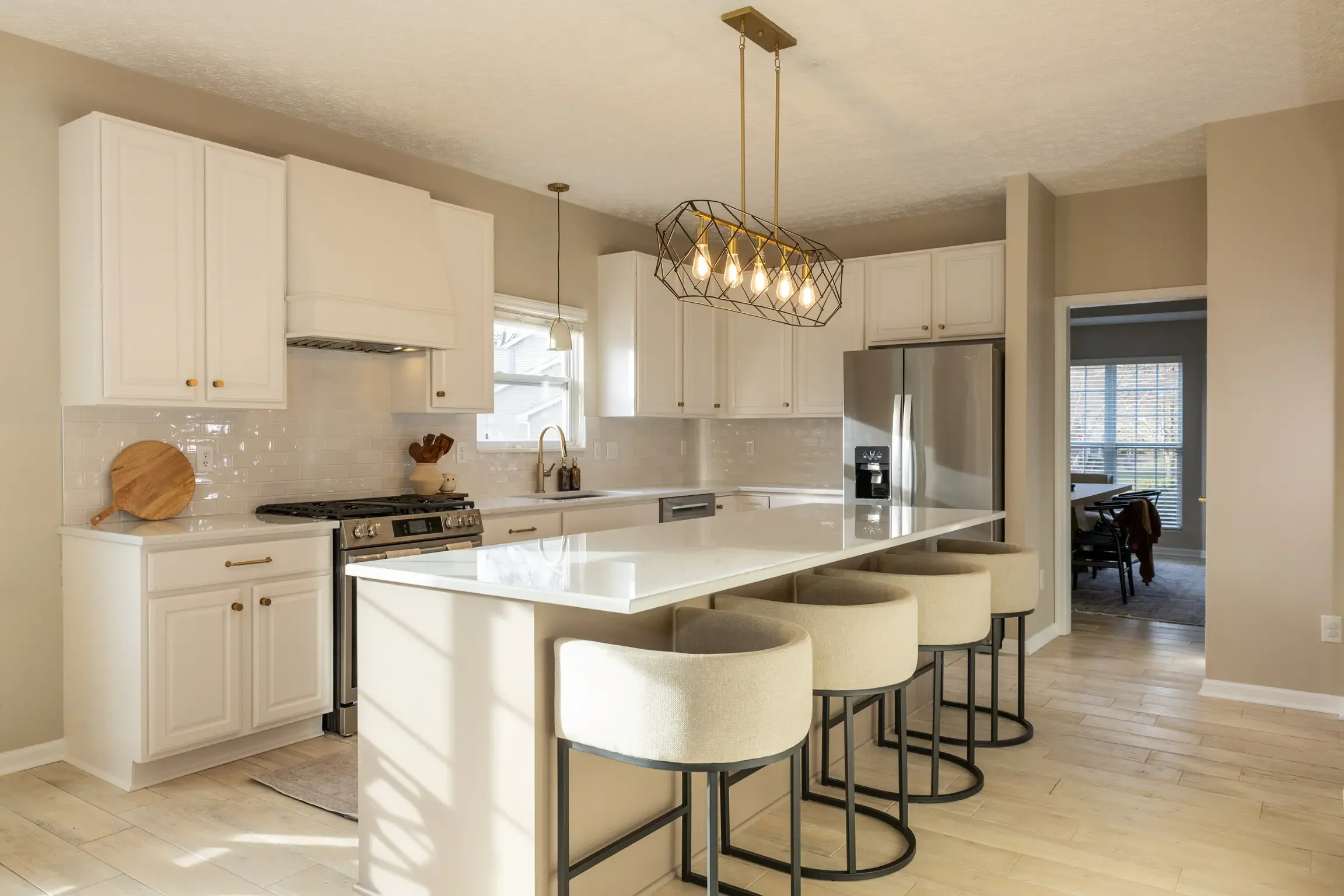
Kitchen Refresh — Dublin · $20K–$50K
New quartz countertops, backsplash, island cabinetry, custom hood, and lighting in the existing footprint.
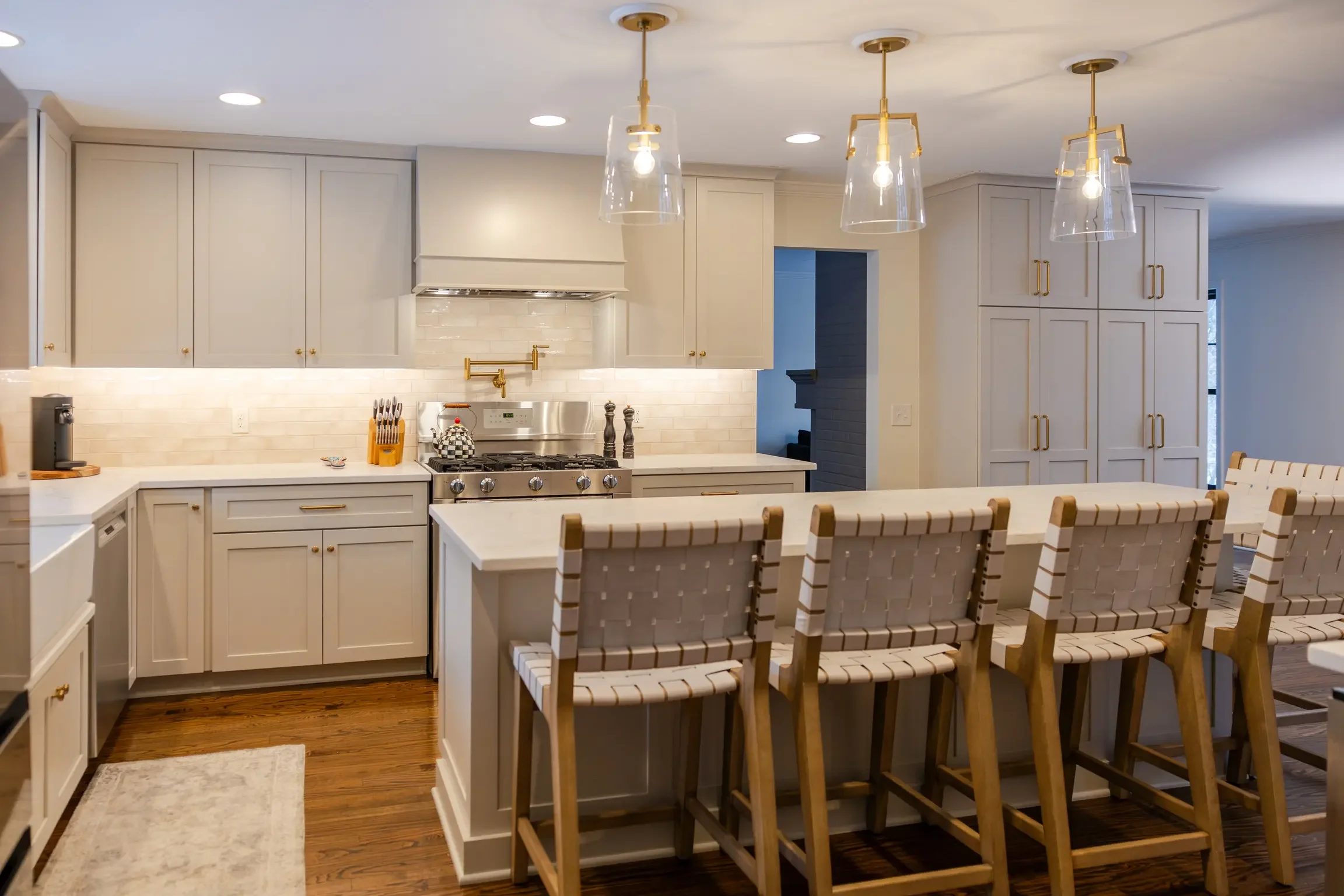
New Kitchen, Same Layout — Upper Arlington · $50K–$110K
Full custom-cabinet reset with quartz countertops, statement lighting, farmhouse sink, brass hardware and addition of a coffee station with custom shelving.
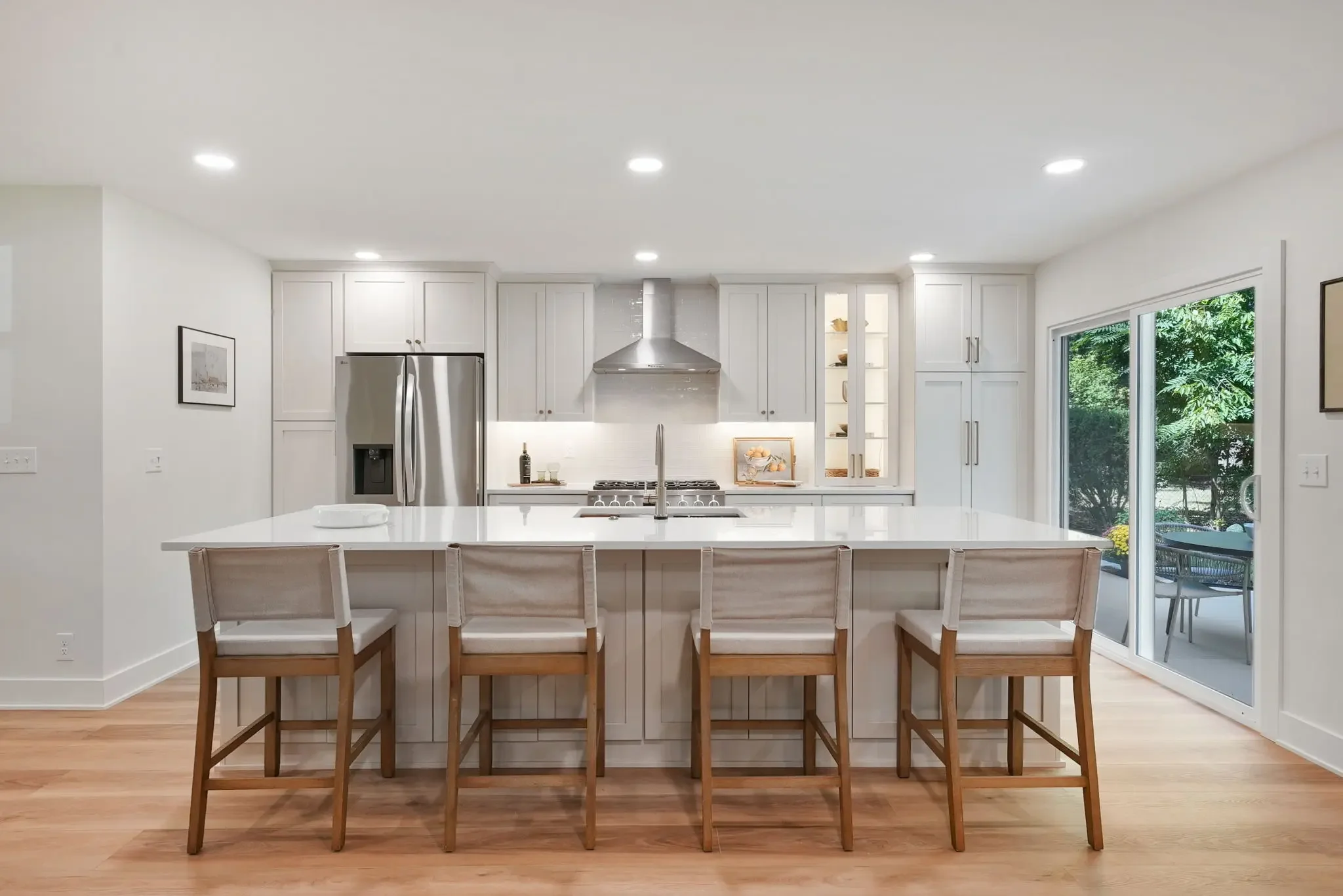
New Kitchen, New Layout — Upper Arlington · $100K–$250K
Opened up the entire 1st floor living space by removing 2 walls, including one load bearing, and installed a beam. Relocated the kitchen location to the center of the first floor and added in a mudroom off of the garage with custom locker storage.
A WORD ON BIDS
Why the Cheapest Quote Usually Costs the Most
The lowest bid wins on paper and loses in reality. A low number usually means the job was under-scoped to win it, or the gap gets made up in change orders once you're committed. Either way, the "savings" disappear by week three.
We work differently. Every Elevate project starts with real design and planning — full measurements, selections, and a 3D rendering of your new layout — so you're deciding from a complete picture before construction begins. You're hiring a fully managed build with vetted trade partners, not a crew juggling six other jobs. You're investing in a kitchen that's right the first time.
Other Columbus Remodeling Costs
Planning more than the kitchen? Bundling projects with one design-build team lowers mobilization, permit, and management costs.
Bathroom remodel — Check out our 2026 Bathroom Remodel Cost guide
Basement finishing — Learn more here
Whole-home & additions —Learn more here
Frequently Asked Questions
-
Between $20,000 and $350,000 in 2026. A refresh runs $20,000–$50,000, a full new kitchen in the same layout $50,000–$110,000, a new layout with structural changes $100,000–$250,000, and a designer kitchen $200,000–$350,000. Your number depends on the kitchen's size, your finishes, and the condition of the existing space.
-
On-site construction takes 3 to 22 weeks depending on scope. The full project takes longer because of design and material lead times — most notably fully custom cabinetry, at 10–14 weeks from approved drawings. Counting design, lead times, and construction, most full remodels span several months from first meeting to finished kitchen.
-
For resale, a minor kitchen remodel recoups roughly 113% of its cost (2025 Cost vs. Value Report) — the highest-returning interior project — while major upscale remodels recoup around 36%. If you're selling soon, a refresh is the ROI play; if it's your forever home, a full remodel is a lifestyle investment that still recoups a meaningful share and scores a perfect 10 on homeowner satisfaction.
-
Fully custom Amish-made cabinets are built to order from approved shop drawings, so they carry a 10–14 week lead time. Semi-custom cabinets are faster (4–8 weeks) because they don't require shop drawings. Cabinet lead time is usually the single biggest factor in the overall timeline.
-
Tariffs that took effect in late 2025 apply to imported cabinets and vanities. Our fully custom cabinets are Amish-made in the U.S., so they're not subject to those import increases — which helps insulate your largest line item from tariff-driven price swings.
-
We start with a free, on-site consultation about your scope and finishes, then create a 3D rendering of your proposed layout and give you an exact quote — not a range. The price only changes if you choose to add scope or upgrade beyond the original proposal.
-
Yes, in most cases. Any work involving plumbing, gas, electrical, or structural changes requires a permit through the City of Columbus or your municipality (e.g., Upper Arlington or Dublin). We handle permitting as part of the project.
Ready to See Your Number?
We'll walk your space, talk through what you want, and follow up with a 3D rendering and an exact quote. No obligation.